
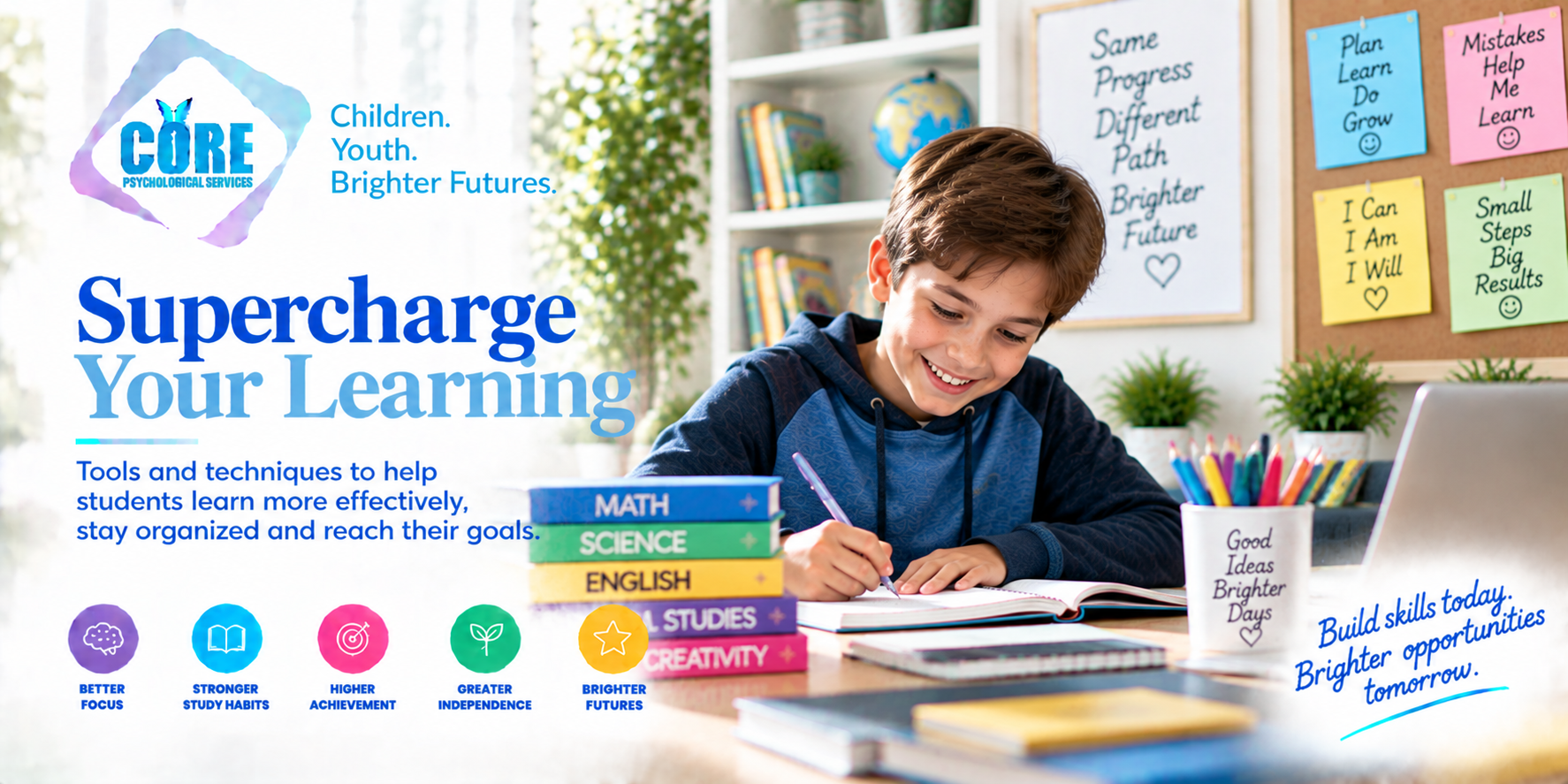
Supercharge Your Learning

CORE CENTRE · STUDENT LEARNING RESOURCES .

Practical strategies to help students learn more effectively, organize their work, manage time and become more independent learners. Better learning is not about studying longer. It is about developing strategies that make learning more purposeful and manageable.

Build Skills That Make Learning Work Better

Students often know what they need to complete but are less certain about how to plan, organize and approach the work efficiently. Strong learning habits can make academic demands feel more manageable.

Start With a Plan

Breaking larger responsibilities into smaller steps, identifying priorities and deciding when work will happen can reduce last-minute pressure.

Develop a System That Fits

There is no single perfect study system. Useful strategies should be realistic, repeatable and suited to the student’s age, workload and learning needs.

Four Skills That Strengthen Learning

Small improvements in planning and study habits can make a meaningful difference over time.

Plan & Prioritize

Identify what needs to be done, decide what matters most and break larger tasks into manageable steps.

Manage Your Time

Use realistic schedules, allow enough time for important work and avoid relying on last-minute effort.

Study Actively

Engage with material through recall, practice, explanation and review rather than simply rereading.

Review & Adjust

Notice what is working, identify obstacles and change strategies when a system is not helping..

Turn Good Intentions Into Repeatable Habits

Use One Reliable Planning System

Keep assignments, deadlines and important dates in a consistent place that is checked regularly.

Break Down Big Tasks

Turn projects and exam preparation into smaller actions with clear starting points.

Create Focused Work Periods

Set a specific task for each work period and reduce unnecessary distractions where possible.

Prepare Before Pressure Builds

Regular review and earlier preparation can make tests, deadlines and busy weeks more manageable.

When Self-Directed Strategies Are Not Enough
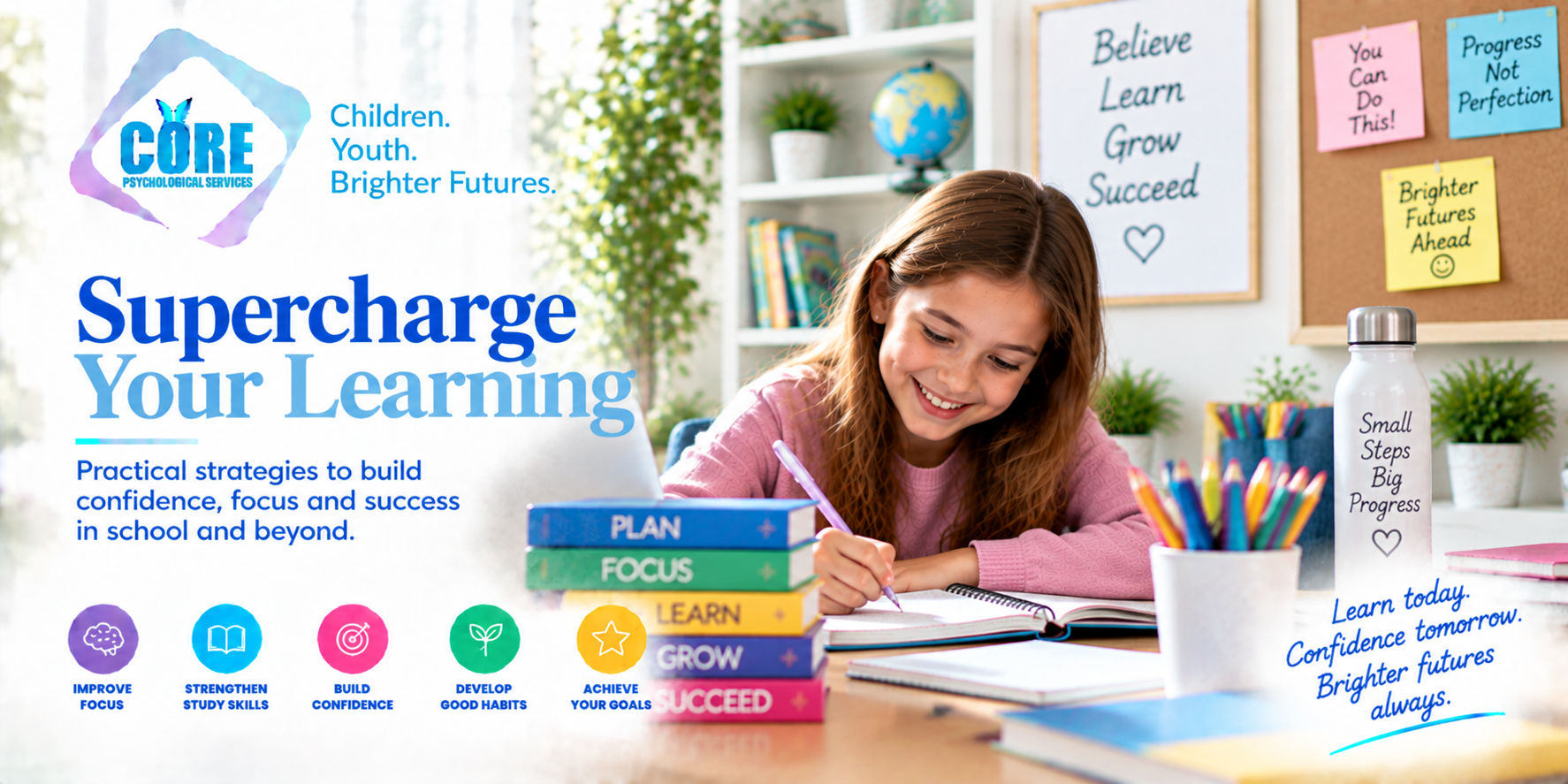
Study & Organizational Skills Support. Some students benefit from individualized help developing study habits, time management, test preparation, organization and greater academic independence.


Psychoeducational Assessment

When persistent learning difficulties or an unclear learning profile are affecting school performance, a psychoeducational assessment may provide more comprehensive information about strengths and areas of need.

Flexible Delivery

In Person or Online

Sessions may be provided at our Mississauga clinic or online. Parent guidance may be included when appropriate, particularly for younger students who need help establishing routines at home.

The Goal: Greater Academic Independence

Effective learning strategies should gradually help students take greater ownership of their work.

Know What to Do Next

Clear systems make it easier to identify the next useful action instead of feeling overwhelmed.

Use Time More Intentionally

Planning helps students allocate effort according to priorities rather than urgency alone.

Build Confidence Through Practice

Repeated use of workable strategies can make challenging academic demands feel more manageable.

Become More Independent

The long-term goal is for students to increasingly plan, monitor and adjust their own learning.

Download the Supercharge Your Learning Guide

Core Centre’s Supercharge Your Learning: A Guide to Academic Success brings together practical ideas for study strategies, time management, organization, concentration, healthy routines and greater academic confidence.

A Practical Student Resource

Use the guide as a starting point for reviewing current habits, trying new approaches and identifying strategies that make learning more manageable.

Build on What Works

Students do not need to use every strategy. The goal is to experiment thoughtfully, keep the approaches that help and adjust those that do not..

Recommended Learning Resources

A curated collection of established resources can support practice, curiosity and independent exploration without overwhelming students with too many choices.

Khan Academy

Free lessons and practice across mathematics, science, computing and other subjects. Visit Khan Academy


Science Through Video

Crash Course Kids and SciShow Kids use engaging videos to explore science questions and concepts. Crash Course Kids · SciShow Kids

Reading & Stories

Storyline Online features children’s books read aloud by professional performers and can support reading engagement and comprehension. Visit Storyline Online

Explore the World

National Geographic Kids and museums, galleries and science centres can turn curiosity into purposeful exploration. Explore National Geographic Kids

Learn Through Video, Stories & Exploration

Crash Course Kids

Engaging educational videos that introduce science topics for younger learners. Explore the channel


SciShow Kids

Accessible science videos built around questions, experiments and curiosity. Explore the channel


Storyline Online

Children’s books read aloud by professional performers, supporting reading engagement and comprehension. Visit Storyline Online

Museums & Virtual Exploration

Museums, galleries, science centres and cultural institutions often provide virtual exhibits and educational collections that can turn screen time into purposeful exploration.

Learning Beyond Screens

Learning does not need to happen on a screen. Everyday activities can strengthen curiosity, communication, creativity and problem-solving.

Read Widely

Library books, magazines, biographies, fiction and non-fiction can expand vocabulary, knowledge and imagination.

Play Strategy Games

Board games, puzzles and other strategy-based activities can encourage planning, flexible thinking and problem-solving.

Build, Make & Tinker

Creative projects using art materials, household objects or simple construction materials encourage experimentation and persistence.

Explore Interests Deeply

A student’s own interests can become powerful starting points for research, reading, writing, creating and independent learning.

Continue Exploring

Continue with related Core Centre resources and services.

Study & Organizational Skills

Individualized support for study habits, planning, time management, test preparation and academic independence. Explore support

Giftedness Resources

Explore learning, educational challenge, emotional development and support for gifted children and youth. Explore resources

Scholarships & Grants

Information to help students and families research educational opportunities, awards, scholarships and grants. Explore opportunities

Academy of Excellence

Support for the broader development of gifted youth, including emotional intelligence, leadership and personal growth. Explore the Academy

Ready to Build Stronger Learning Habits?

Explore individualized Study & Organizational Skills support for students who would benefit from practical strategies, structure and greater academic independence.

Support may be available in person or online.


STUDY & ORGANIZATIONAL SKILLS FAQ

Learning Strategy FAQs

Practical answers for families considering support with study habits, planning, time management, and school organization.

Is studying longer always better?
No. Productive study depends on how students use their time. Focused, active and well-planned learning can be more useful than simply increasing the number of hours spent studying.
Why do large assignments feel difficult to start?
Large tasks can feel vague or overwhelming. Breaking them into smaller, clearly defined actions can make the starting point easier to identify.
What is active studying?
Active studying requires the student to work with the material—for example by recalling information, practising, explaining ideas or applying what has been learned—rather than relying only on passive rereading.
How can students become more organized?
A consistent planning system, regular review of deadlines and routines for managing materials and assignments can help build organization over time.
When should we consider individualized support?
If difficulties with planning, studying, time management or academic independence continue despite reasonable strategies, individualized Study & Organizational Skills support may be useful.