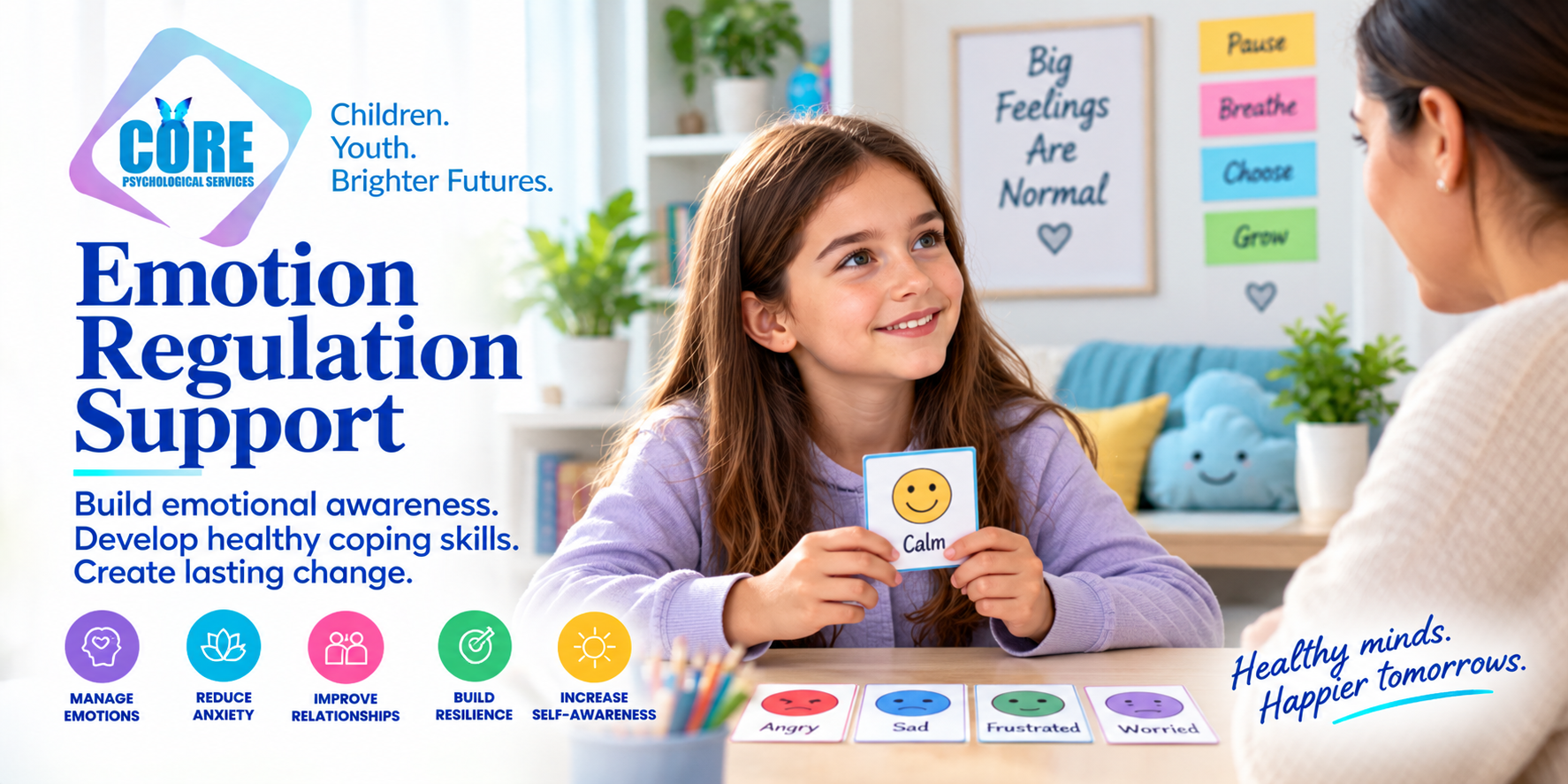
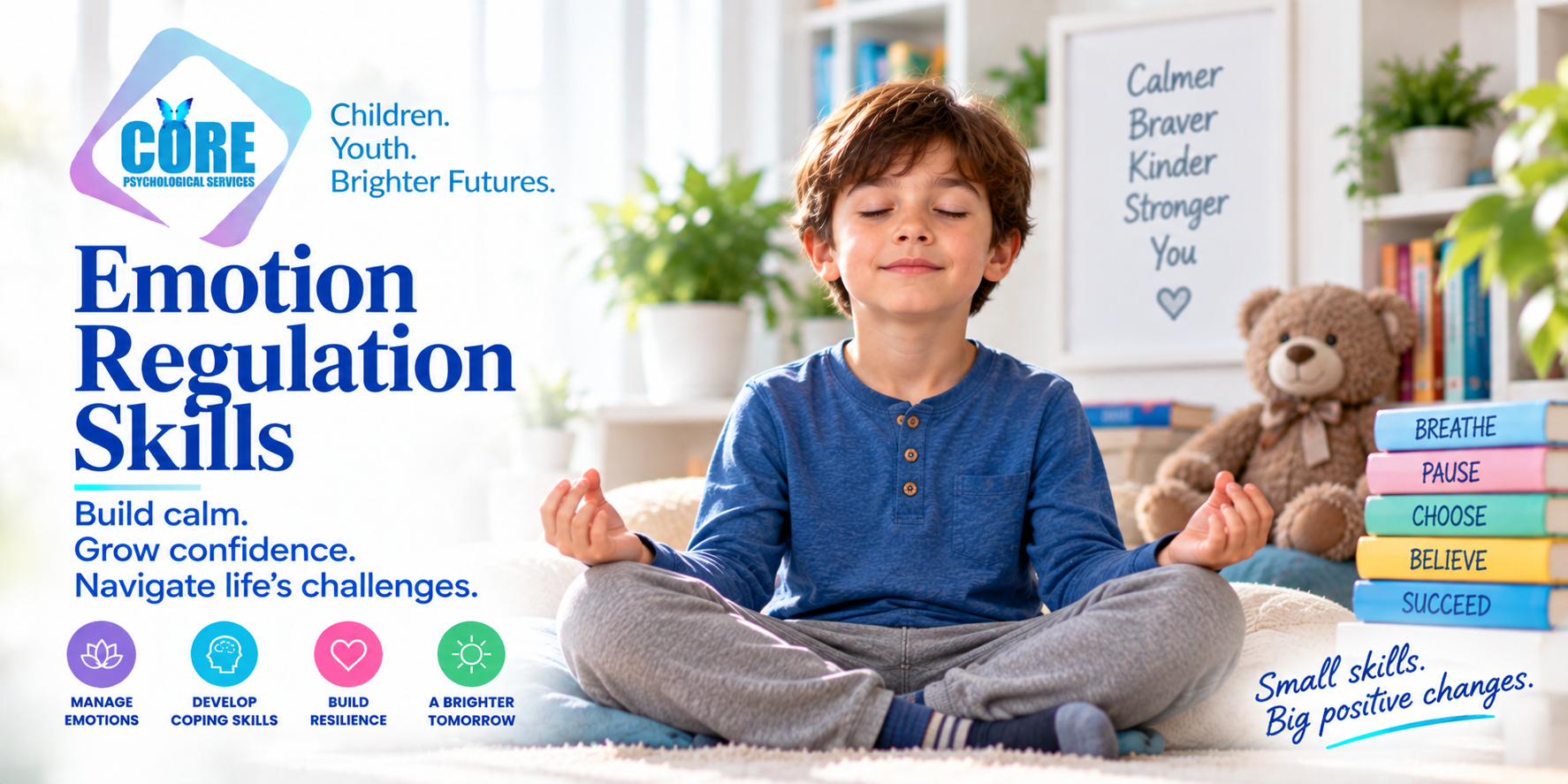
Emotion Regulation Support in Mississauga

Helping children, teens, and young adults understand strong emotions, recognize patterns and triggers, and develop practical ways to respond. Emotion regulation support at Core Centre is individualized to the young person’s age, needs, and goals. Sessions focus on building awareness, coping strategies, confidence, and greater independence in managing everyday emotional challenges. Sessions may be provided in person at our Mississauga clinic or online.

When Might Emotion Regulation Support Be Helpful?

Strong emotions are a normal part of development, but some young people need additional support learning how to recognize, communicate, and manage emotional responses in everyday situations.

Strong Emotional Reactions

Support may be helpful when a young person experiences:

✓ Frequent frustration or emotional overwhelm
✓ Difficulty calming after becoming upset
✓ Intense reactions to disappointment or change
✓ Trouble expressing feelings constructively
✓ Difficulty recognizing what triggers strong emotions
✓ Reduced confidence in handling challenging situations


Everyday Independence & Coping

Sessions can also help young people work toward:

✓ Greater emotional awareness
✓ More flexible responses to challenges
✓ Improved problem-solving
✓ Better communication of needs and feelings
✓ Increased confidence and independence
✓ Practical coping strategies for home, school, and relationships

Skills We Can Work On Together

Emotion regulation is not about eliminating difficult feelings. It is about learning to notice emotions, understand them, and choose more effective ways of responding.

Recognize Emotions

Build awareness of emotional states and develop clearer language for identifying and expressing feelings.

Understand Triggers

Notice situations, thoughts, patterns, or demands that may contribute to strong emotional reactions.

Develop Coping Tools

Practise practical strategies for calming, pausing, problem-solving, and responding more effectively.

Build Independence

Strengthen confidence in using emotional skills with increasing independence across everyday situations.

How Emotion Regulation Support Works

1. IDENTIFY PATTERNS

We begin by understanding the situations, emotions, and responses that are creating difficulty.

2. BUILD AWARENESS

The young person learns to recognize emotional cues, triggers, and patterns with age-appropriate support.

3. PRACTISE STRATEGIES

Sessions introduce practical coping, communication, and problem-solving strategies that can be rehearsed and refined.

4. APPLY & REVIEW

Skills are applied to everyday situations and progress is reviewed, with parent involvement included when appropriate.

Focused, Practical Support

Emotion regulation support is structured to give young people time to understand their patterns, learn new strategies, and practise skills that can be used outside the session.

Typical Format

Usually 6–8 Sessions

Support is typically provided over approximately 6–8 sessions, with sessions lasting about 60 minutes. The exact course may vary according to individual needs, goals, and progress.

Family Support

Parent Involvement When Appropriate

Parents may be involved or provided with guidance when appropriate so strategies can be understood and reinforced in everyday life. Sessions may be offered in person or online.

From Strong Emotions to Stronger Skills

The goal is to help young people develop a more confident and independent relationship with their emotions—not to expect them never to feel upset, frustrated, worried, or disappointed.

Greater Awareness

Recognize emotions and early signs of escalation before reactions become harder to manage.

More Effective Responses

Develop alternatives to impulsive or unhelpful reactions when emotions become intense.

Confidence & Independence

Increase confidence in handling challenges and using strategies with less adult prompting over time.

Skills Across Settings

Apply emotional regulation strategies at home, at school, and in social or family situations.


EMOTION REGULATION FAQ

Questions About Emotion Regulation Support

Here are answers to common questions families have about emotion regulation sessions at Core Centre.

What ages does Emotion Regulation support?
Core Centre’s Emotion Regulation support is intended for children, teens, and young adults approximately 6–21 years of age.
How many sessions are usually recommended?
Support is typically provided over approximately 6–8 sessions. The exact number can vary according to the young person’s needs, goals, and progress.
How long is each session?
Sessions are approximately 60 minutes.
Can sessions be completed online?
Yes. Emotion Regulation sessions may be provided online or in person at the Core Centre clinic in Mississauga.
Are parents involved in the sessions?
Parent involvement or guidance may be included when appropriate. This depends on the young person’s age, needs, goals, and the strategies being developed.
What is the goal of emotion regulation support?
The goal is to help the young person better recognize and understand emotions, identify triggers, develop practical coping strategies, and build confidence and independence in managing everyday emotional challenges.

Help Build Confidence With Strong Emotions

With individualized support and practical strategies, children, teens, and young adults can become more aware of their emotions and more confident in how they respond to everyday challenges.

Ages 6–21 • In person or online   Contact Core Centre to get started →