Social Skills Support in Mississauga

AGES 6–21 • IN-PERSON OR ONLINE

Practical, individualized support to help children, teens, and young adults communicate more confidently, understand social situations, and build healthier connections. Social skills develop over time and can be strengthened with guidance and practice. Sessions at Core Centre focus on the individual’s needs—from starting conversations and understanding social cues to navigating friendships, respecting boundaries, and communicating effectively. Sessions may be provided in person at our Mississauga clinic or online.

When Might Social Skills Support Be Helpful?

Some young people benefit from direct support understanding the unwritten parts of social interaction and practising skills that make conversations, friendships, and everyday relationships easier to navigate.

Conversation & Communication

Support may be helpful with:

✓ Starting and maintaining conversations
✓ Taking turns and staying on topic
✓ Listening and responding appropriately
✓ Asking questions and showing interest
✓ Expressing thoughts or needs clearly
✓ Adjusting communication to different situations

Friendships, Cues & Boundaries

Sessions can also address:

✓ Making and maintaining friendships
✓ Recognizing social cues and perspectives
✓ Understanding personal space and boundaries
✓ Handling disagreement or misunderstandings
✓ Joining groups and shared activities
✓ Building confidence in social situations

Social Skills We Can Practise

Social skills are learned through understanding, modelling, practice, feedback, and real-life experience. Sessions focus on skills that are meaningful to the individual young person.

Conversations

Practise starting, maintaining, and ending conversations while listening and responding to others.

Social Cues

Develop greater awareness of facial expressions, tone, body language, context, and other social information.

Friendships

Explore skills involved in joining in, sharing interests, handling differences, and maintaining healthy peer relationships.

Boundaries

Build understanding of personal space, respectful limits, consent in everyday interactions, and appropriate social expectations.

How Social Skills Support Works

1. IDENTIFY GOALS

We begin by understanding which social situations are difficult and which skills would be most useful to strengthen.

2. LEARN THE SKILL

Social concepts are explained clearly and broken into manageable, age-appropriate steps.

3. PRACTISE & REFLECT

Skills are rehearsed through discussion, examples, role-play, problem-solving, and reflection on real situations.

4. APPLY IN DAILY LIFE

The young person works on transferring skills into everyday settings, with parent guidance included when appropriate.

Individualized Support With Real-Life Relevance
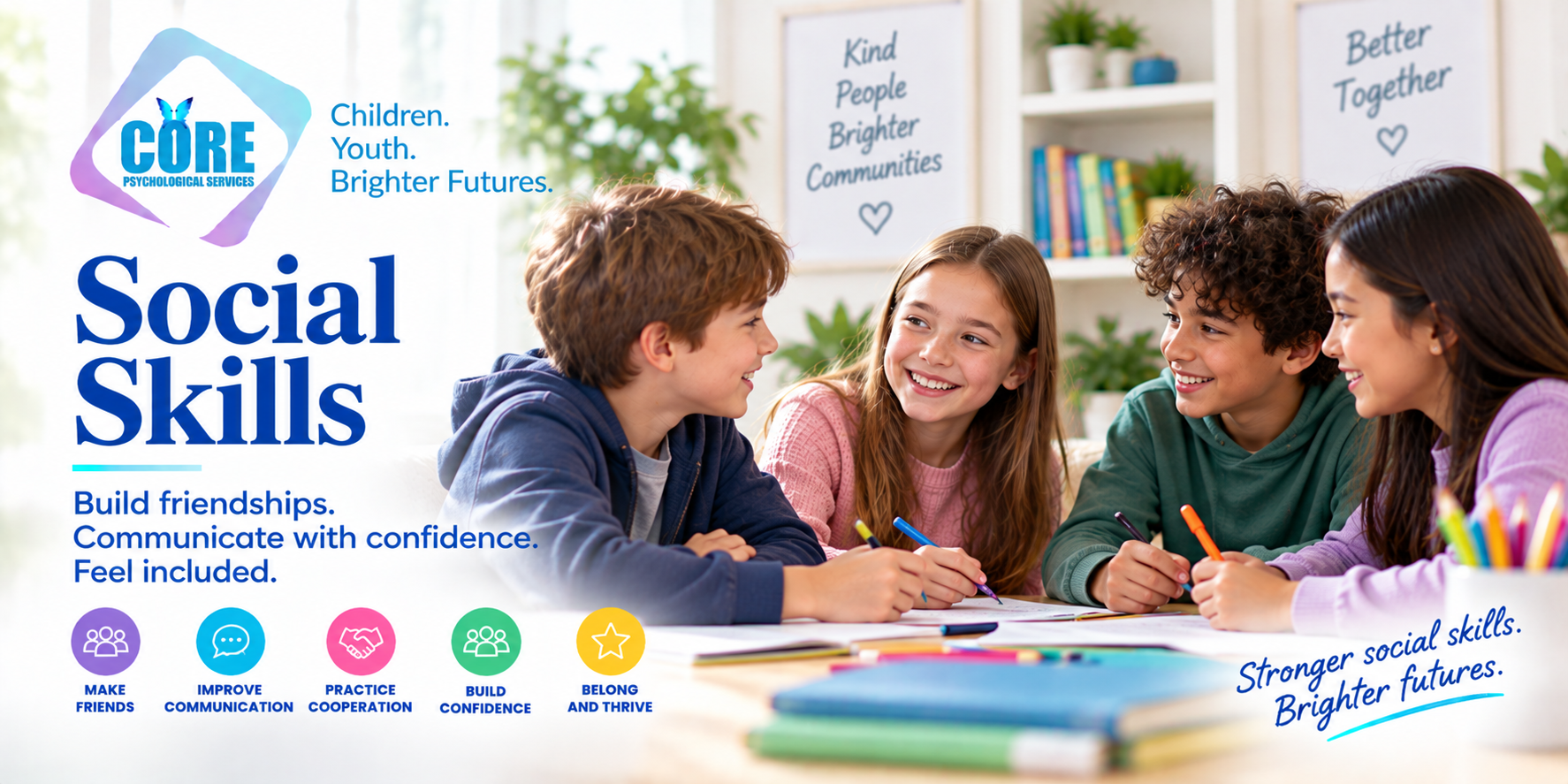
Rather than teaching a fixed script, support is adapted to the young person’s age, communication style, current challenges, and the social situations that matter in everyday life.

Typical Format

Usually 6–8 Sessions

Support is typically provided over approximately 6–8 sessions, with sessions lasting about 60 minutes. Goals and pacing are individualized according to the young person’s needs and progress.

Flexible Delivery

In Person or Online

Sessions may be offered face-to-face at our Mississauga clinic or online. Parent involvement or guidance may be included when appropriate to help reinforce useful skills outside the session.

Building Confidence in Everyday Social Situations

The goal is not to make every young person communicate in exactly the same way. It is to strengthen understanding, flexibility, confidence, and practical skills for navigating relationships and social situations.

Communicate Clearly

Develop more effective ways to express ideas, needs, interests, and responses during interaction.


Read the Situation

Increase awareness of social context, cues, perspectives, and how situations can change.


Navigate Relationships

Build strategies for friendships, group situations, misunderstandings, disagreements, and respectful boundaries.

Grow Confidence

Practise skills in a supportive setting so they can be used with greater confidence and independence in daily life.


SOCIAL SKILLS FAQ

Questions About Social Skills Support

Here are answers to common questions families have about individualized social skills support at Core Centre.

What ages does Social Skills support?
Core Centre’s Social Skills support is intended for children, teens, and young adults approximately 6–21 years of age.
What kinds of social skills can sessions address?
Goals may include conversation skills, friendships, recognizing social cues, understanding perspectives, personal space and boundaries, communication, and navigating everyday social situations.
How many sessions are usually recommended?
Support is typically provided over approximately 6–8 sessions, with the exact number depending on individual goals, needs, and progress.
How long is each session?
Sessions are approximately 60 minutes.
Can Social Skills sessions be completed online?
Yes. Sessions may be provided online or in person at the Core Centre clinic in Mississauga.
Are parents involved?
Parent guidance or involvement may be included when appropriate to the young person’s age, goals, and needs, particularly when it can help reinforce skills in everyday situations.

Stronger Social Understanding Can Build Greater Confidence

Individualized social skills support can help children, teens, and young adults better understand social situations, practise useful communication strategies, and approach everyday relationships with greater confidence.

Ages 6–21 • In person or online   Contact Core Centre to get started →